



Pool Leak Detection & Repair Gold Coast
Losing water from your pool every day? We find the source and fix it, fast.
A pool losing more than 2–3 mm of water a day is likely leaking, not evaporating. In South East Queensland’s climate it is easy to blame the heat, but undetected leaks waste thousands of litres a week, drive up water bills, and cause serious damage to pool shells and surrounds.
SEQ Pipe Works specialises in precision pool leak detection and repair across Gold Coast, including underwater inspections that pinpoint the source without unnecessary excavation.
Is Your Pool Leaking? Here’s How to Tell
Many pool leaks go unnoticed for months because owners assume the loss is evaporation. The bucket test is the simplest check: fill a bucket to the pool’s water level, place it on a step, and compare both after 24 hours with the pump off. If the pool has dropped more than the bucket, you have a leak
Common warning signs include:
- Recurring sewer or stormwater leaks
- Corrosion or pin-holing
- Evidence of thinning pipe walls
- Persistent sewer odours
- Water staining or moisture within service cavities
- Repeated repairs to the same stack
- Increasing emergency plumbing costs
- CCTV showing deterioration or defects
- Pipework that is difficult or expensive to access
Confidence for high-value work
- Gold Coast Locals
- Licensed & insured
- Fast response times

SEQ Pipe Works
Top-rated on Google Reviews
4.8

76 Reviews


 Trustindex verifies that the original source of the review is Google.
 Trustindex verifies that the original source of the review is Google.
 Trustindex verifies that the original source of the review is Google.
How We Find Pool Leaks
We use a combination of diagnostic methods to locate leaks precisely, minimising disruption to your pool and surrounds.

Pressure Testing
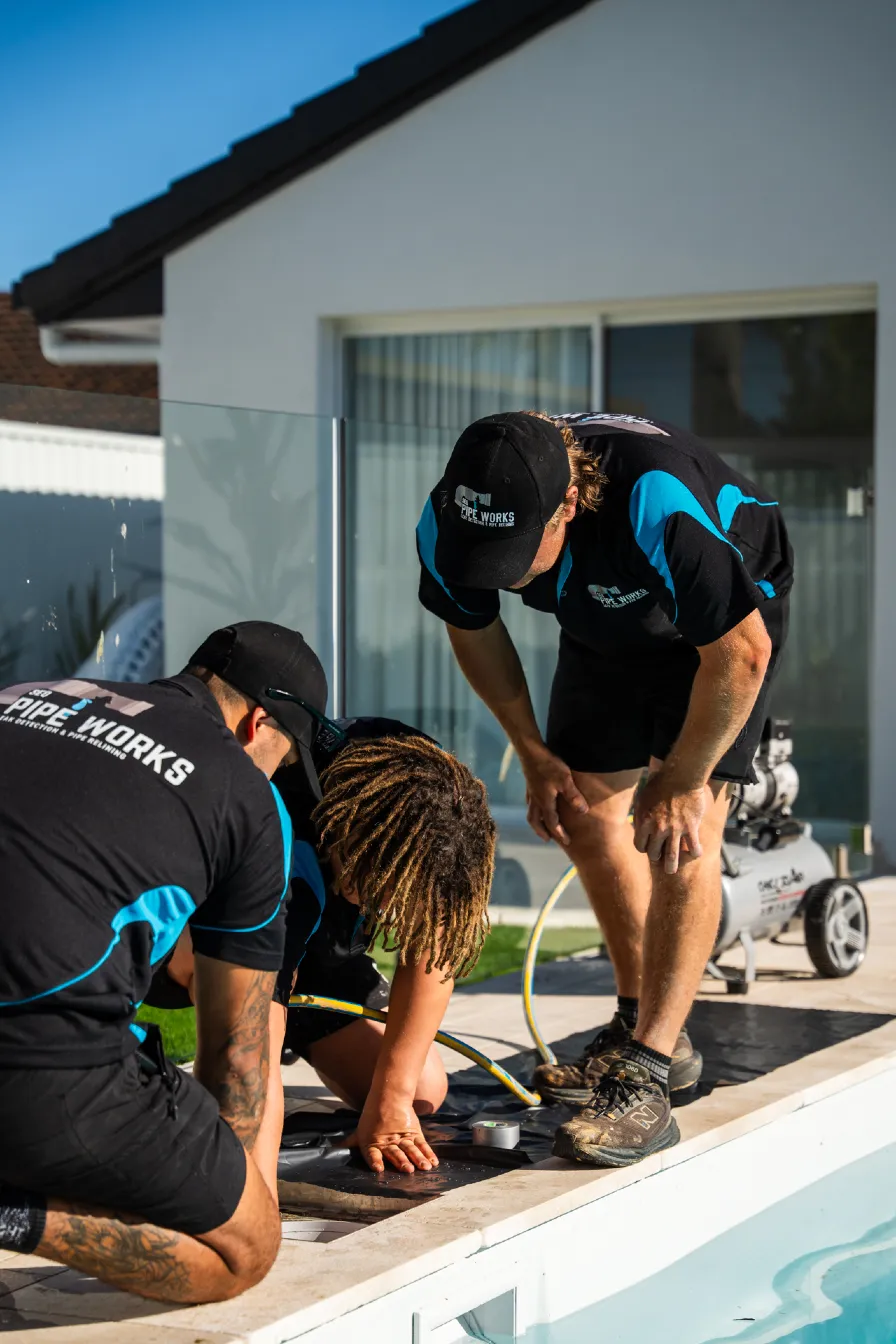
We isolate and pressurise the pipework, including return lines, suction lines, and the skimmer, to identify any pressure drop indicating a break or joint failure. This pinpoints leaks in underground pipes that would otherwise be impossible to find without digging.
Dye Testing
A small amount of dye is injected near fittings, lights, returns, skimmers, and shell cracks. If there is a leak, the dye is drawn toward it and the exact entry point becomes visible. This method is particularly effective for fittings and penetrations at the waterline.
Underwater Inspection
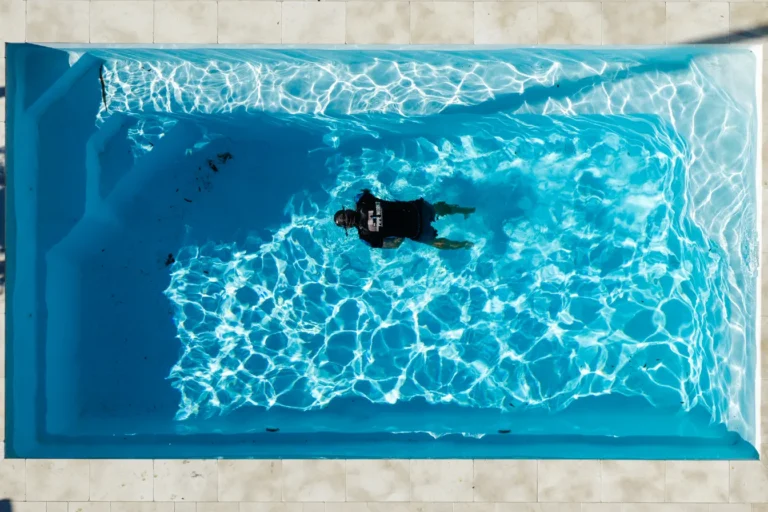
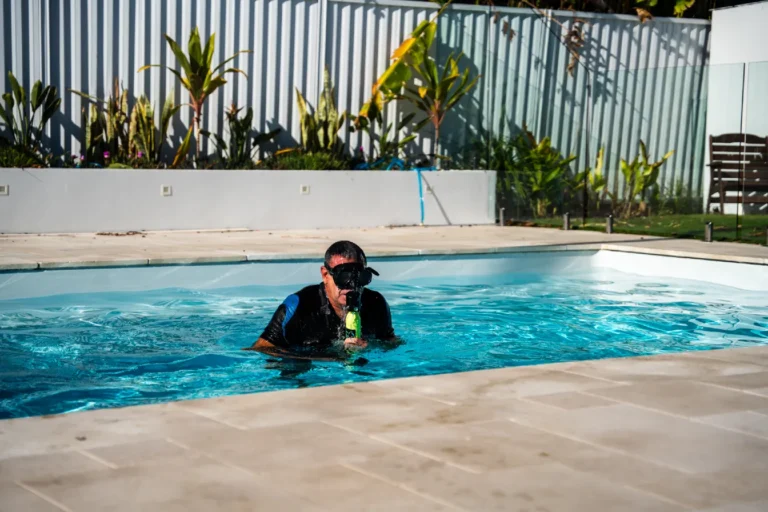
Our underwater inspections are carried out in-water, so the pool does not need to be drained. We inspect the pool shell, hydrostatic valve, lights, and all submerged penetrations for cracks, gaps, and structural failures.
CCTV Pipe Inspection
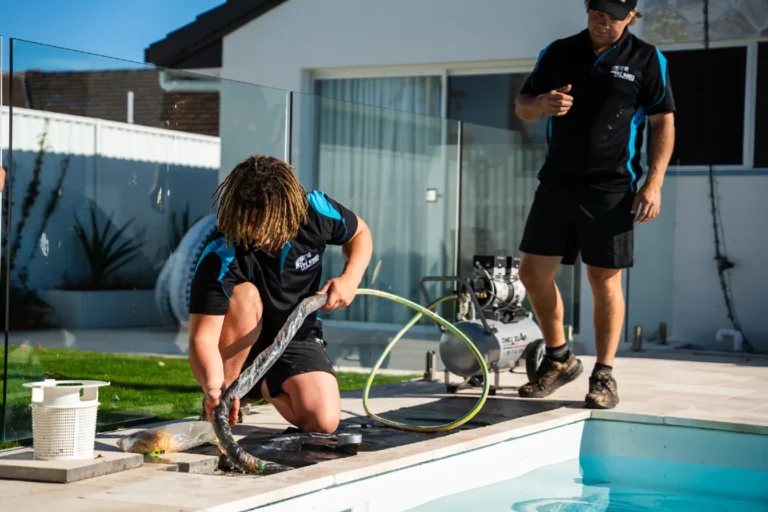
Where a pipe leak is suspected, we deploy CCTV camera equipment to inspect the underground plumbing in detail. You receive clear footage of any cracks, joint failures, or pipe collapses before any repair work begins.
Pool Leak Repair Options
Once the source is confirmed, we recommend the most appropriate repair.
Pipe relining: Where underground plumbing has cracked or failed at a joint, a resin liner is inserted and cured inside the existing pipe, sealing the leak permanently without excavation. No tiles, decking, or garden beds need to be disturbed.
Fitting and penetration repair: Leaks at returns, skimmers, lights, and other fittings are repaired using underwater epoxy or sealant products, or by replacing the fitting entirely. In many cases this work is carried out in-water.
Shell crack repair: Minor cracks are repaired with specialist underwater compounds. Larger structural cracks may require partial drainage and a more involved repair. We assess the extent of cracking during inspection and advise on the right approach.
Equipment and valve repair: Where a leak is traced to pool equipment, valves, or filter pad connections, we repair or replace the affected components and pressure-test the system on completion.
Why Pool Leaks Get Worse Over Time
A small pool leak does not stay small. Escaping water saturates and erodes the surrounding soil, causing the pool shell to shift and crack further. In extreme cases, voids form beneath the shell, leading to subsidence and structural failure far more expensive than the original repair. Addressing a leak early is almost always significantly cheaper than waiting.
Gold Coast Pool Leak Detection
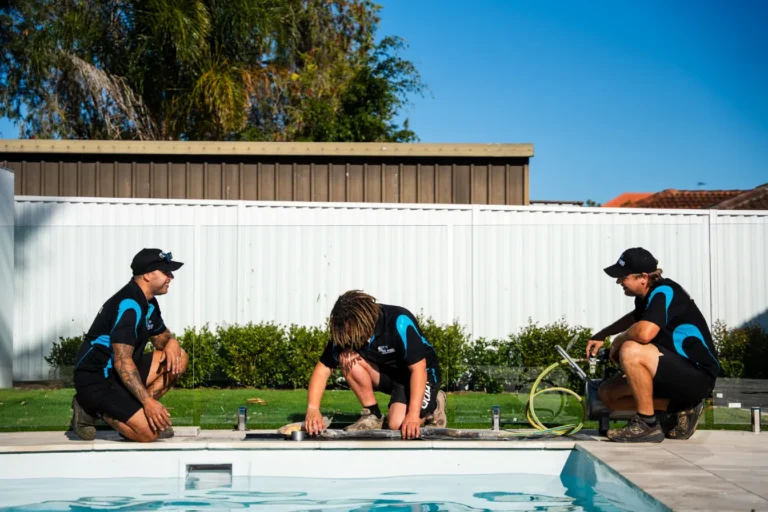
From Coolangatta to Helensvale, and everywhere in between, SEQ Pipe Works provides expert pool leak detection and repair across the entire Gold Coast. Whether you are in Southport, Robina, Burleigh Heads, Varsity Lakes, Palm Beach, Broadbeach, Nerang, or Mudgeeraba, our team can locate the source of your leak and fix it with minimal disruption to your pool and property.
If your Gold Coast pool is losing water, don’t wait for the problem to get worse. Call SEQ Pipe Works today or fill in our online form for a fast response and upfront quote.
Frequently Asked Questions
Evaporation on the Gold Coast typically accounts for around 5 mm per day in summer, and less in cooler months. If your pool is consistently losing more than 5-10 mm per day, a leak is the most likely cause. The evaporation rate depends on size, depth and location of your pool.
No. In most cases we inspect in-water, including the underwater inspection of the shell, fittings, and lights. Draining is only necessary for certain structural repairs, and we will advise you in advance if that is the case.
Most inspections are completed within two to three hours. More complex situations with extensive underground pipework or multiple suspected leak points may take longer..
The most common causes are cracked or displaced underground pipes, failed fittings and seals at skimmers, returns, and lights, cracks in the pool shell, and leaks at the equipment pad. Older fibreglass or concrete pools that have not been maintained are particularly susceptible.
Yes. Ongoing water loss saturates the surrounding soil, which can undermine the pool structure, cause subsidence in nearby paving, and damage landscaping. If the pool is close to the house, foundations can also be affected.
Yes. We handle both detection and repair, including pipe relining, fitting and penetration repairs, and shell crack repairs. You will not need to engage a separate trade.
Place a bucket on a step in your pool, filled to match the pool’s water level. Turn the pump off and check both after 24 hours. If the pool has dropped more than the bucket, you likely have a leak. A professional inspection is still needed to locate the exact source.
Yes. Pool supply and return pipes are good candidates for pipe relining, provided the diameter is within the range our system supports. Relining seals the pipe from the inside, restoring full function without excavation, and carries a long-term structural guarantee.